
&emoji=&slug=kriptovijesti&button_colour=b532ed&font_colour=ffffff&font_family=Poppins&outline_colour=ffffff&coffee_colour=FFDD00)




Fear & Greed Index at 39 indicates Fear sentiment, reflecting market caution. While regulatory uncertainty and ETF volatility weigh on prices, sustained institutional allocation and infrastructure developments provide underlying support.
Republican CLARITY Act Briefing Today Could Catalyze Institutional Capital Flows as Regulatory Fog Lifts
Republican leadership will hold a conference call with crypto industry insiders today to discuss the latest developments in the CLARITY Act text. This marks a significant step in the legislative process for crypto regulation, with industry stakeholders receiving direct updates on the bill’s progress. The act aims to provide clear regulatory frameworks for digital assets, potentially ending years of regulatory uncertainty that has constrained institutional participation.
Why it matters: Legislative clarity directly impacts institutional capital allocation decisions, with historical data showing regulatory certainty typically accelerates fund inflows. Bipartisan support could trigger traditional financial institutions to accelerate crypto market positioning while reducing compliance costs for DeFi protocols transitioning toward regulated frameworks.
Fed Rate Cut Odds Hit 92% for September as Crypto Markets Price In Liquidity Pivot and 35% Historical Bitcoin Gains
CME FedWatch tool shows market expectations for a 25 basis point Fed rate cut in September have surged to 92%, up from 78% a week ago. Simultaneously, the probability of cumulative 50 basis point cuts by year-end has reached 68%. This expectation shift stems from persistently declining inflation data and cooling labor market signals, with July nonfarm payrolls slowing to 150,000 and unemployment ticking up to 4.1%.
Why it matters: Rate cut cycles typically trigger capital rotation from safe-haven to risk assets, with historical data showing Bitcoin averaging 35% gains in the 3 months following the Fed’s first cut. Liquidity easing will reduce institutional funding costs while dollar weakness could drive revaluation of dollar-denominated crypto assets and enhance DeFi yield attractiveness.
August 13th US CPI Release Could Trigger 50bp Rate Cut Bets and Reshape Crypto’s H2 Trajectory
The US Bureau of Labor Statistics will release July Consumer Price Index (CPI) data on August 13th, with market expectations of 3.0% year-over-year growth and 3.2% for core CPI. This data will serve as a critical reference for the Fed’s September policy meeting, directly impacting rate cut magnitude expectations. Markets have fully priced in a 25 basis point cut, but if inflation unexpectedly falls below 2.8%, the probability of a 50 basis point cut could surge significantly.
Why it matters: CPI data is the core trigger for Fed policy pivots, with the inflation trajectory determining liquidity release velocity. Below-consensus data could trigger rapid dollar index declines and collective risk asset rallies, with Bitcoin-Nasdaq correlation typically rising above 0.8 when rate cut expectations strengthen. Institutional capital allocation pacing will adjust based on inflation data, shaping Q3 crypto market fund flows.
Michael Saylor: ‘Need Another Color’ Tweet Signals Potential Pause in Strategy’s Bitcoin Accumulation Amid $8.8B Unrealized Loss
CryptoQuant CEO Ki Young Ju: Spot Demand Weakening Signals Institutional Caution Despite Positive Futures Activity
CryptoQuant founder Ki Young Ju warns that Bitcoin spot demand is deteriorating while futures market activity, though still positive, has declined significantly from levels seen during the market rebound three months ago. This divergence between spot and derivatives markets reveals institutional hesitation at current price levels, suggesting that rally momentum lacking spot market support may prove unsustainable despite continued derivatives interest.
Analyst Ali Charts: ETH Channel Support at $1,850 Could Trigger Rebound to $2,060 Upper Boundary
BitMEX Co-Founder Arthur Hayes: 8-Day Accumulation of 3,270 ETH at $1,917 Average Signals Bullish Conviction Amid Weakness
Arthur Hayes purchased an additional 644.34 ETH ($1.25 million) eight hours ago, bringing his 8-day accumulation to 3,270 ETH worth $6.27 million at an average price of $1,917. The BitMEX co-founder’s sustained buying activity amid Ethereum’s recent underperformance sends a strong bullish signal to the market, with his cost basis potentially serving as a psychological support level for traders monitoring whale activity.
Tesla (TSLA): Zero BTC Trading Activity Forces $112M Q2 Impairment, Accounting Rules Penalize Long-Term Crypto Holdings
The company’s crypto trading dormancy since 2021 signals management’s conservative stance on Bitcoin as corporate treasury asset. Unlike Strategy’s aggressive accumulation model, Tesla treats its Bitcoin position as static investment, making the stock less sensitive to crypto price movements but vulnerable to one-sided accounting impacts during market downturns.
Tron Inc. (NASDAQ): Acquires 150K TRX at $0.33 Average, 706.7M Token Treasury Mirrors Corporate Bitcoin Playbook
Investors must assess TRX liquidity risks, regulatory uncertainty, and related-party transaction transparency with Tron Foundation. Unlike Bitcoin’s deep liquidity, TRX’s smaller market cap and trading depth create higher exit risk for large positions. The strategy raises questions about accounting treatment, impairment methodology, and whether TRX qualifies as treasury reserve asset under corporate governance standards.
Crypto Stock Sector: Top 10 Decliners All Negative With 39.7% Max Loss Signals Broad Risk-Off Sentiment
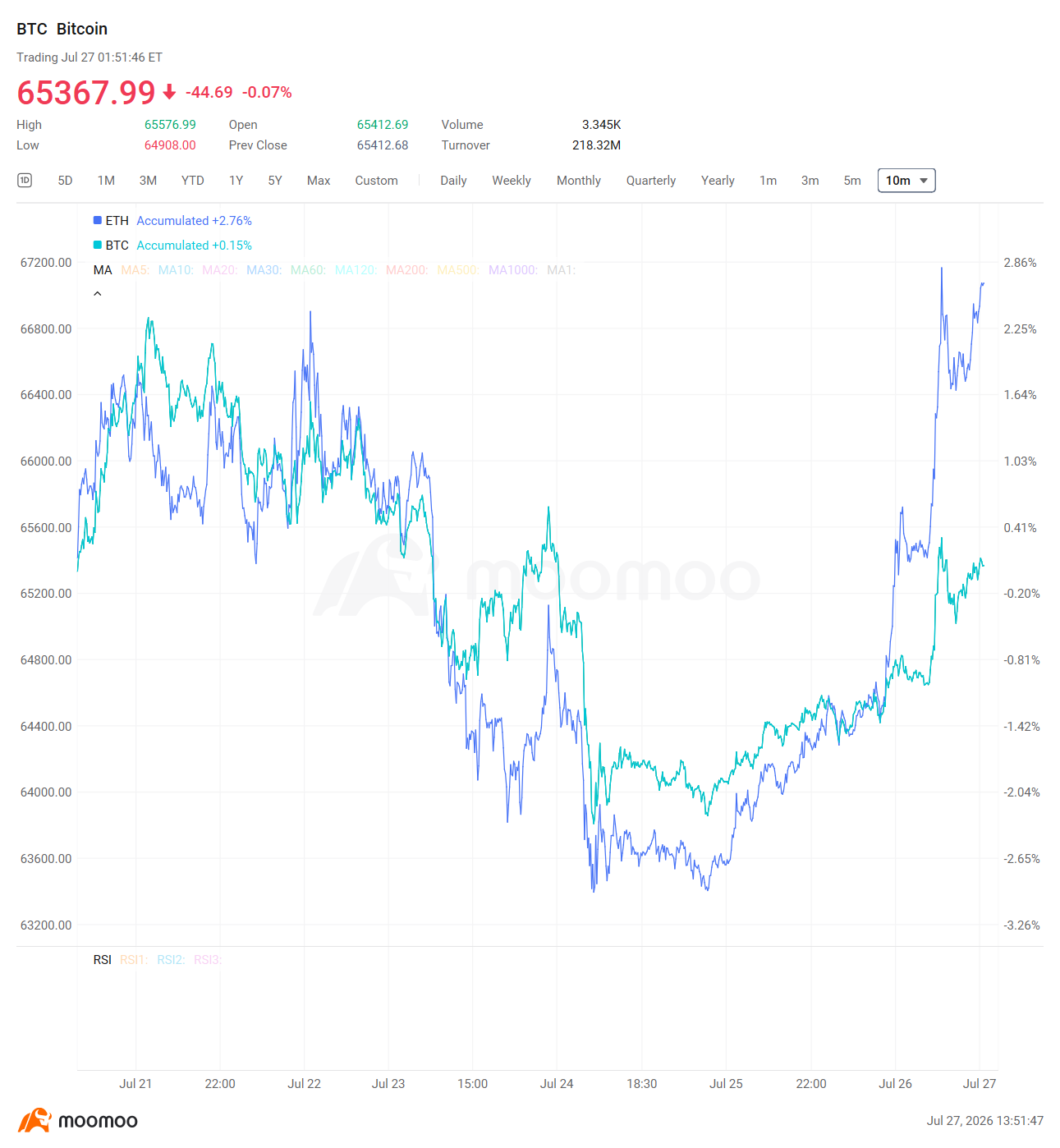
All top 10 crypto-related stocks by absolute decline posted negative returns ranging from -8.65% to -39.66%, indicating sector-wide selling pressure. Bitcoin’s $65,010 price trades 13.9% below Strategy’s $75,476 cost basis, dragging down crypto stock valuations across the board. Absence of major mining companies or exchange stocks in top decliners suggests smaller-cap, high-volatility crypto concept stocks face disproportionate selling.
Declining risk appetite drives capital rotation from speculative crypto equities to defensive assets. The sector-wide decline reflects heightened concerns over crypto regulatory uncertainty, tightening macro liquidity, and corporate crypto asset impairment risks. Investors should note correlation breakdown between Bitcoin price and crypto stock performance, as equity-specific factors like leverage, operational execution, and accounting treatment amplify downside beyond underlying crypto asset moves.
Strategy (MSTR): $8.8B Unrealized Loss on 843K BTC Tests Leveraged Treasury Model Amid 13.9% Cost Basis Premium
Strategy holds 843,775 BTC at $63.7 billion total cost with $75,476 average price, facing $8.8 billion unrealized loss as Bitcoin trades at $65,010. The 13.9% underwater position exposes vulnerabilities in the company’s aggressive leveraged acquisition strategy during market corrections.
Strategy’s continuous accumulation through convertible debt and equity raises questions about execution discipline when holdings trade below cost basis. The stock’s amplified correlation to Bitcoin price creates magnified downside risk, while upcoming convertible debt maturities may pressure refinancing capacity. Investors must assess whether management will maintain buying discipline and how prolonged unrealized losses impact the company’s $37 billion market cap premium to net asset value.







 &emoji=&slug=kriptovijesti&button_colour=b532ed&font_colour=ffffff&font_family=Comic&outline_colour=ffffff&coffee_colour=FFDD00)